



Industrial fluid transfer systems are evolving fast. As processes become more complex, engineers are no longer satisfied with standard rubber hoses or basic metal hoses. They need solutions that can handle aggressive chemicals, extreme temperatures, vibration, and long-term fatigue without frequent replacement.
This is where the Teflon metal hose stands out. By combining the chemical resistance of Teflon (PTFE) with the mechanical strength of a stainless steel corrugated hose structure, it creates a highly reliable solution for demanding industrial environments.
In this guide, you will understand how this hose works, why it is increasingly used across industries, how it compares with other hose types, and what you should consider before selecting it for your system.
Table of Contents
Why Modern Industries Are Moving Toward Hybrid Hose Structures
Traditional hose systems typically fall into two categories:
- Rubber hoses: flexible but limited in temperature and chemical resistance
- Metal hoses: strong but sometimes limited in chemical compatibility
Modern industrial systems require both:
- High chemical resistance
- High temperature stability
- Mechanical flexibility
- Long service life under vibration
This demand has driven the adoption of hybrid structures like Teflon-lined metal hoses.
According to industrial fluid transfer studies referenced in chemical engineering material guides, PTFE-based materials are widely used due to their excellent chemical inertness and thermal stability.
What Is a Teflon Metal Hose?
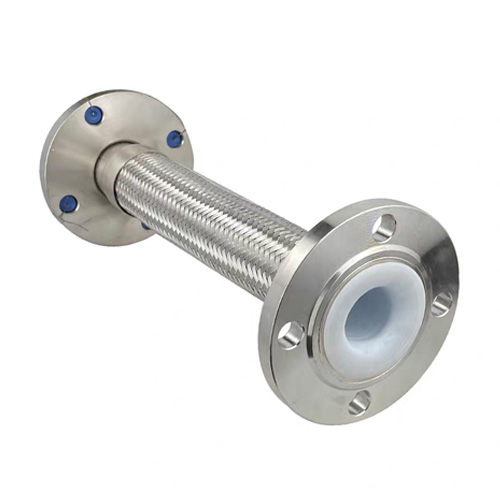
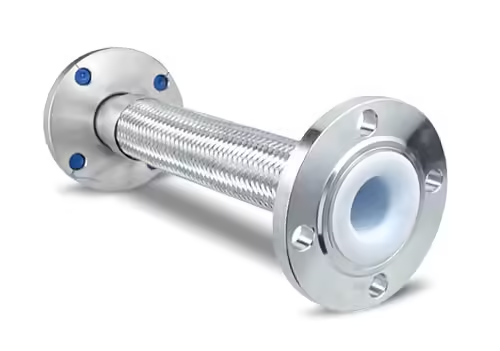
A Teflon metal hose is a composite hose structure that typically includes:
- Inner lining: PTFE (Teflon) layer for chemical resistance
- Outer layer: stainless steel corrugated braid for pressure resistance
- Intermediate structure: flexible corrugation for movement absorption
This combination creates a hose capable of handling aggressive media while maintaining mechanical durability.
You can also explore related system components here:
How Teflon Metal Hose Works in Industrial Systems
The working principle is based on dual-layer engineering:
Inner PTFE Layer
- Prevents chemical reaction with media
- Reduces contamination risk
- Ensures smooth fluid flow
Outer Metal Braiding
- Provides structural strength
- Resists pressure expansion
- Protects against mechanical damage
Corrugated Core
- Allows flexibility
- Absorbs vibration
- Reduces stress on connected equipment
This structure makes it suitable for both static and dynamic applications.
Why PTFE (Teflon) Is Critical in Chemical Transfer Systems
PTFE is one of the most chemically inert materials available in industrial engineering. It resists:
- Strong acids
- Strong alkalis
- Solvents
- Reactive industrial fluids
This makes it essential in systems where contamination or chemical reaction cannot be tolerated.
According to materials engineering references, PTFE has one of the lowest friction coefficients among solid materials, which also improves flow efficiency in fluid transfer systems.
Key Advantages of Teflon Metal Hose
1. Exceptional Chemical Resistance
The PTFE inner layer prevents corrosion and chemical degradation even in highly aggressive environments.
2. High Temperature Stability
Teflon metal hoses perform well in both high and low temperature environments, making them suitable for thermal cycling systems.
3. Mechanical Strength from Metal Braiding
The stainless steel outer layer protects against:
- External damage
- Pressure expansion
- Abrasion
4. Vibration and Movement Absorption
Corrugated structure helps reduce stress on:
- Pumps
- Rotary joints
- Compressors
- Pipeline connectors
You can explore related rotary systems here:
Comparison Table: Teflon Metal Hose vs Other Hose Types
| Feature | Rubber Hose | Standard Metal Hose | Teflon Metal Hose |
|---|---|---|---|
| Chemical Resistance | Low–Medium | Medium | Excellent |
| Temperature Resistance | Medium | High | Very High |
| Flexibility | High | Medium | High |
| Pressure Resistance | Medium | High | High |
| Contamination Risk | Medium | Low | Very Low |
| Service Life in Harsh Media | Short | Medium | Long |
This comparison shows why hybrid PTFE-metal hoses are widely used in modern industrial systems.
Common Industrial Applications
Chemical Processing Systems
Used for transferring corrosive fluids where contamination must be avoided.
Steam and Thermal Systems
Handles high-temperature media without degradation.
Rotary Equipment Connections
Often used alongside rotary joints to absorb vibration and movement.
Pharmaceutical and Clean Systems
Ensures clean fluid transfer without chemical leaching.
Industrial Automation Systems
Used in continuous production lines where reliability is critical.
Engineering Considerations Before Selection
Choosing the right Teflon metal hose requires evaluating:
Operating Temperature Range
Ensure compatibility with thermal conditions.
Chemical Compatibility
Confirm resistance to all transferred media.
Pressure Rating
Match hose structure with system pressure requirements.
Movement Requirements
Consider axial, lateral, or vibration movement.
Installation Environment
Space constraints and bending radius matter significantly.
Common Failure Causes
Even advanced hoses can fail if not correctly applied.
Over-Bending
Exceeding minimum bend radius reduces service life.
Pressure Surges
Sudden spikes can damage corrugated structure.
Improper Grounding or Support
Mechanical stress should not concentrate on hose ends.
Chemical Misapplication
Using incompatible chemicals can degrade PTFE lining over time.
Maintenance and Lifecycle Optimization
To extend service life:
- Inspect outer braiding regularly
- Avoid twisting during installation
- Monitor vibration sources in connected equipment
- Ensure proper support alignment
- Replace hoses showing early deformation signs
Industrial maintenance studies show that preventive inspection can significantly reduce unexpected hose failures in continuous operation systems.
Why Engineers Prefer Teflon Metal Hose in Modern Systems
Modern industrial design is moving toward:
- Higher chemical complexity
- Continuous operation cycles
- Compact equipment layouts
- Lower maintenance dependency
Teflon metal hoses align well with these trends because they reduce failure points and simplify system design.
They are especially valuable in systems where downtime is expensive or difficult to manage.
Final Thoughts
The Teflon metal hose represents a modern engineering solution designed for increasingly demanding industrial environments. By combining chemical resistance with mechanical strength, it bridges the gap between traditional rubber hoses and standard metal hoses.
When properly selected and installed, it improves system reliability, reduces maintenance frequency, and enhances overall operational safety in complex fluid transfer applications.
FAQ
What is a Teflon metal hose used for?
It is used for transferring chemicals, high-temperature fluids, and corrosive media in industrial systems.
Why combine Teflon with metal hose?
Teflon provides chemical resistance while metal provides mechanical strength.
Can it handle high pressure?
Yes, the metal braiding structure supports high-pressure applications.
Is it suitable for hot fluids?
Yes, PTFE maintains stability under high-temperature conditions.
What causes Teflon metal hose failure?
Common causes include over-bending, pressure surges, and incorrect chemical use.
Where is it commonly used?
It is widely used in chemical processing, thermal systems, rotary equipment, and industrial automation.
Latest News
Insights & Innovation
