



Table of Contents
When you operate industrial machinery, the reliability of your rotary unions can make or break your production efficiency. Understanding how to select a rotary unions manufacturer ensures that your systems receive high-quality components designed for your specific needs. This guide will take you step-by-step through the process, offering actionable advice, practical examples, and detailed comparisons that empower you to make informed decisions.
Understanding Rotary Unions
A rotary union is a mechanical device that allows fluid—such as water, oil, steam, or hydraulic media—to flow from a stationary supply into a rotating part of your equipment. Unlike simple hoses or pipes, rotary unions maintain a tight seal under rotation, high pressure, and temperature changes.
If you’ve experienced downtime due to leaking or inefficient connections, you know how costly it can be. Choosing the right manufacturer is your first step toward eliminating these issues.
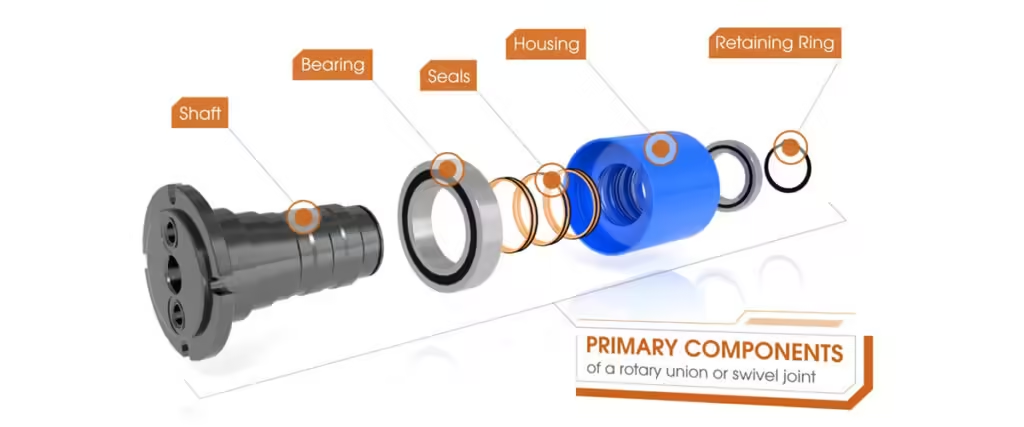
Key components include:
- Housing: Connects to the stationary supply line.
- Rotor or Shaft: Rotates while transferring fluid.
- Seals: PTFE, graphite, or metal seals maintain pressure and prevent leakage.
- Bearings: Support smooth rotation and reduce wear.
Understanding these components will help you evaluate different manufacturers’ capabilities and designs.
Applications Where Rotary Unions Are Critical
Your industrial operations may rely on rotary unions in various applications:
- Paper Industry: High-speed dryers require precise steam delivery.
- Textile Machines: Calenders and stenters need consistent heating and cooling.
- Plastic Extrusion Lines: Melted polymer requires continuous thermal fluid transfer.
- Food and Beverage Processing: Sterilization and pasteurization rely on rotating heat exchangers.
- Hydraulic Equipment: Powering rotating hydraulic cylinders efficiently.
Case Study: A textile production plant was experiencing uneven drying in its high-speed stenter machine. By partnering with a specialized rotary unions manufacturer and upgrading to a dual-passage, metal-sealed rotary union, the facility reduced material defects by 30% and increased throughput by 18%.
Factors to Consider When Choosing a Rotary Unions Manufacturer
When selecting a manufacturer, consider these crucial aspects:
| Factor | Why It Matters | What to Look For |
|---|---|---|
| Industry Experience | Ensures the manufacturer understands operational challenges | Over 10 years in producing rotary unions for your sector |
| Customization Options | Every system has unique requirements | Ability to tailor seals, size, and material |
| Material Quality | Impacts lifespan and reliability | Stainless steel, corrosion-resistant alloys, and durable seal materials |
| Testing and Certification | Confirms reliability | Pressure testing, temperature endurance, and ISO certifications |
| After-Sales Support | Reduces downtime | Technical support and maintenance guidance |
| Delivery Capabilities | Aligns with project schedules | Flexible lead times and shipping options |
Focusing on these factors ensures that your investment in a rotary union delivers long-term performance.
Types of Rotary Unions You Might Consider
Rotary unions vary depending on your operational needs:
- Single-Passage: Simple and cost-effective for low-pressure, low-speed operations.
- Double-Passage: Enables simultaneous supply and return for thermal fluids.
- Metal-Sealed: Handles high temperature and pressure applications.
- PTFE-Sealed: Reduces friction and minimizes maintenance needs.
- Multi-Passage: Supports complex machinery with multiple media lines.
Selecting the right type ensures your equipment runs efficiently and avoids costly downtime.
Customization and Design Considerations
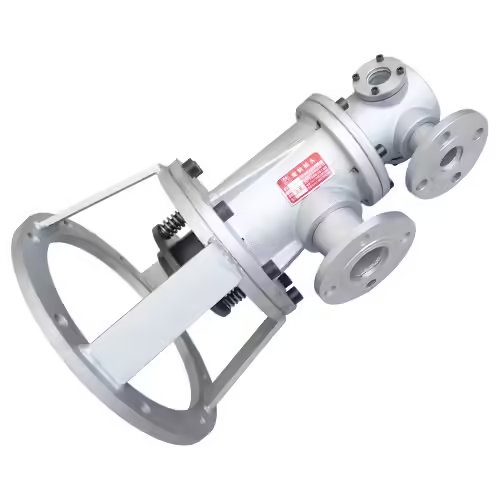
If your system has unique requirements, a rotary unions manufacturer should offer customization. Consider:
- Seal Materials: High-temperature graphite or PTFE depending on media.
- Housing Material: Stainless steel, duplex alloys, or carbon steel for different environments.
- Passage Number: Single, double, or multi-passage depending on media complexity.
- Connection Types: Threaded, flanged, or welded to fit your system.
Example: A chemical processing plant required a triple-passage rotary union for simultaneous steam, water, and inert gas delivery. Standard off-the-shelf solutions could not meet the requirement, but the rotary unions manufacturer provided a customized solution that integrated all three lines while maintaining leak-free operation.
Installation Tips
Proper installation is critical to achieving peak performance:
- Alignment: Misaligned connections cause seal wear and leaks.
- Torque: Follow rotary unions manufacturer’s torque recommendations.
- Lubrication: Pre-lubricate bearings if required.
- Startup Testing: Monitor pressure and temperature during initial runs.
Poor installation is a leading cause of rotary union failures, even with high-quality components.
Maintenance Practices
Routine maintenance ensures your rotary unions continue to operate efficiently:
- Inspect seals and bearings every 3–6 months.
- Remove debris and buildup that could compromise seal integrity.
- Replace worn parts proactively before failure occurs.
Case Study: A food processing line implemented a preventive maintenance schedule with their rotary unions supplier, reducing unexpected downtime by 45% over two years.
Comparing Manufacturers
Evaluating rotary unions manufacturers helps you make the right choice:
| Manufacturer Feature | Importance | Example Benefits |
|---|---|---|
| Experience | High | Proven solutions in high-speed operations |
| Testing Facilities | High | Pressure and temperature tests guarantee reliability |
| Customization | Medium | Tailored designs for unique processes |
| Support Services | High | Technical guidance reduces operational risk |
| Delivery Speed | Medium | Ensures minimal production delays |
By comparing these factors, you can identify a partner who aligns with your operational goals.
Conclusion
Choosing the right rotary unions manufacturer directly impacts your equipment performance, reduces downtime, and ensures long-term reliability. By evaluating experience, customization capabilities, material quality, and support services, you can partner with a rotary unions manufacturer that delivers solutions tailored to your industrial needs.
If you’re ready to upgrade your system with high-performance rotary unions, contact Modern Rotary Joint today for expert consultation and customized solutions designed to keep your operations running smoothly.
FAQ
What industries require rotary unions most frequently?
Rotary unions are critical in paper, textile, plastics, food processing, and hydraulic systems.
Can I get a custom rotary union for unusual media?
Yes, many rotary unions manufacturers provide customized solutions for steam, water, hydraulic oil, and chemical fluids.
How do I know if a rotary union will withstand high-speed rotation?
Check the rotary unions manufacturer’s RPM rating, bearing type, and seal specifications.
How often should I maintain rotary unions?
Inspections every 3–6 months are typical, but operating conditions may require more frequent checks.
Are multi-passage rotary unions worth the investment?
Yes, if your equipment requires multiple media lines, they reduce installation complexity and improve efficiency.
Latest News
Insights & Innovation
