



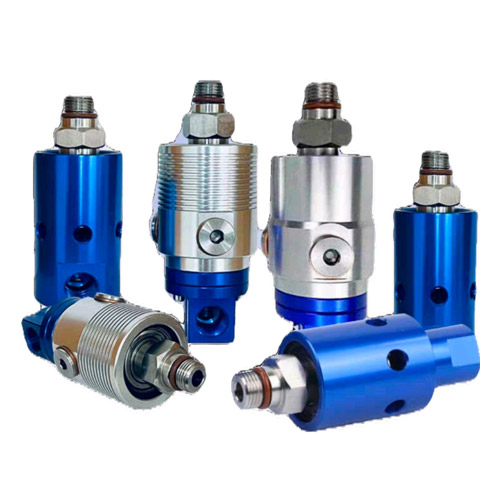
In the complex world of industrial machinery, the fluid connection is often the most overlooked yet critical link in the production chain. When your equipment requires a continuous or oscillating supply of cooling or heating water while rotating 360 degrees, the reliability of a rotary joint for water becomes paramount. For Original Equipment Manufacturers (OEMs), finding a component that matches the specific kinematics of a custom machine is a challenge that off-the-shelf products rarely solve. This article delves into the engineering nuances and strategic sourcing factors that ensure your water rotary union performs flawlessly in high-stakes industrial environments.
Daftar isi
Understanding the Dynamics of Reciprocating Swing and Low-Speed Operation
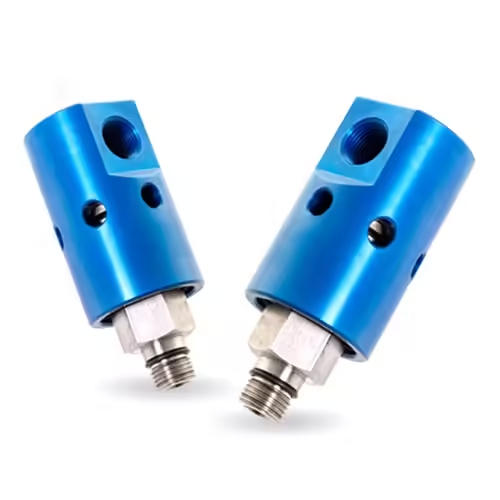
Many industrial applications do not involve constant high-speed spinning. Instead, they require what is known as reciprocating swing or low-speed operation. In sectors like heavy-duty automation or specialized molding, a rotary joint for water must handle frequent changes in direction and slow, deliberate rotations without the benefit of high-speed centrifugal force to help distribute lubrication.
Standard joints are often designed for high-RPM scenarios where the internal friction is managed differently. When a joint operates at low speeds, it is susceptible to the stick-slip effect, where the seals momentarily grab and release the internal shaft. This can cause vibration and premature seal degradation. Professional-grade solutions are engineered with specific surface finishes and seal geometries that prioritize stability during these erratic motion profiles. By ensuring the mechanical seal remains engaged during every degree of swing, you prevent the micro-leaks that eventually lead to system-wide failures.
Aerospace-Grade Sealing: The Heart of a Reliable Water Rotary Union
The seal is the definitive barrier between operational success and a messy, expensive cleanup. For industrial water applications, where chemical additives or hard water minerals are often present, standard nitrile or EPDM rubber seals often fall short. The modern standard for premium rotary joint for water construction involves the integration of imported aerospace-grade sealing rings.
These materials are derived from polymer technologies developed for extreme thermal stability and chemical inertness. Technical reports on high-performance elastomers indicate that aerospace-grade seals can maintain their structural memory and sealing pressure across a much wider temperature range than industrial-grade equivalents. This stability is crucial when the water temperature fluctuates between chilled cooling cycles and hot process water. When you source a joint with these specialized materials, you are effectively buying insurance against the seal hardening and cracking that typically occurs in cheaper alternatives.
Mechanical Support: Enhancing Durability with High-Precision Bearings
While the seals keep the water in, the bearings keep the rotation true. In an industrial water system, the rotary joint for water must withstand both the weight of the attached piping (radial load) and the internal hydraulic pressure pushing against the joint (axial load). If the internal shaft tilts even by a fraction of a millimeter, the seal faces will experience uneven pressure, leading to a localized leak.
The use of high-precision bearings is a non-negotiable requirement for high-end OEM projects. These bearings are designed with tighter tolerances to ensure that the internal spool and the outer housing remain perfectly concentric. By minimizing mechanical play, the bearings allow the joint to rotate with significantly lower torque. This not only reduces the load on your machine’s primary drive motor but also dampens vibrations that could otherwise travel through the entire fluid circuit, potentially loosening fittings or damaging sensitive sensors downstream.
Material Customization: Selecting the Best Housing for Your Environment
Environmental compatibility is a major factor in the longevity of a rotary joint for water. A joint used in a cleanroom food processing facility has vastly different requirements than one used in a steel mill or a maritime environment. OEM projects benefit from the ability to customize the housing material based on these specific stressors.
Stainless steel, particularly grades like 304 or 316, remains the gold standard for maximum corrosion resistance and hygiene. However, for applications where the weight of the rotary assembly affects the machine’s speed or energy consumption, high-strength aluminum alloys provide an excellent alternative. For extreme industrial cases, specialized alloys can be utilized to prevent pitting and stress corrosion cracking. Choosing the right metallurgy ensures that the exterior of the joint remains as robust as the internal engineering, preventing the environmental degradation that often leads to seized components.
Advanced Surface Protection: The Benefits of Full-Body Electroplating
Water systems are inherently corrosive. Even when using stainless steel, the presence of dissolved oxygen and minerals in the water can lead to surface oxidation and calcification over time. To combat this, many professional-grade rotary joints undergo a process of full-body electroplating. This is a functional upgrade that goes beyond simple surface aesthetics.
Full-body treatment ensures that every nook and cranny of the joint, including internal threads and recessed areas, is protected by a uniform metallic barrier. This coating provides a hard, smooth surface that is resistant to the abrasive metal dust and chemical splashes common in factory environments. Research into industrial surface protection shows that electroplated components exhibit significantly higher resistance to salt spray and humidity tests compared to painted or raw-finished parts. For an OEM, this means providing a machine to your end customer that remains rust-free and professional-looking even after years of heavy use.
Technical Specifications and Customization Parameters
To assist in the procurement process, it is helpful to look at the standardized parameters that define a high-performance rotary joint for water. The following table highlights the typical specifications an engineer should consider during the design phase.
| Parameter Category | Specification Range | Industrial Advantage |
| Motion Profile | Reciprocating Swing / Low RPM | Optimized for stable oscillating movement |
| Teknologi Penyegelan | Aerospace-Grade Polymer | High thermal stability and leak prevention |
| Jenis Bantalan | High-Precision Ball/Roller | Reduced torque and perfect alignment |
| Surface Treatment | Pelapisan Listrik Seluruh Tubuh | Maximum protection against rust and chemicals |
| Bahan Perumahan | Stainless Steel / Aluminum / Alloy | Tailored to environmental corrosion levels |
| Tekanan Kerja | Up to 50 Bar (Customizable) | Handles high-pressure cooling circuits |
| Suhu Maksimum | Up to 120 Degrees Celsius | Suitable for hot water and steam cycles |
| Connection Types | BSP, NPT, Flange, Custom | Seamless integration with global standards |
Engineering Integration: Designing for Seamless OEM Installation
A major pain point for OEM designers is the physical integration of components into a tight mechanical envelope. A custom rotary joint for water allows for the modification of port locations, mounting flanges, and overall length. This flexibility ensures that the joint does not interfere with other machine parts, such as sensors or safety guards.
Furthermore, professional suppliers provide 3D CAD models and detailed technical drawings during the design phase. This collaborative approach allows your engineering team to simulate the fluid path and mechanical clearance before a single part is manufactured. By matching the interface of the joint—whether it is a specialized thread or a unique bolt pattern—directly to your machine’s manifold, you eliminate the need for bulky adapters and extra leak points, resulting in a cleaner and more reliable machine design.
Quality Assurance and Long Service Life: The Ultimate ROI
In the sector, the true cost of a component is its initial price plus the cost of any downtime it causes during its lifespan. A cheap rotary joint for water might save money on the initial invoice, but if it fails during peak production, the resulting loss in output can be devastating. This makes long service life the most important return on investment (ROI) metric.
Quality assurance in this field involves rigorous pressure testing and cycle testing before the component ever leaves the factory. By choosing a joint with stable sealing and high-precision components, you are ensuring that the machine stays in operation for its intended service interval without requiring emergency maintenance. For an OEM, this reliability translates into fewer warranty claims and a stronger brand reputation for building durable equipment.
Real-World Applications: Where Custom Water Rotary Joints Excel
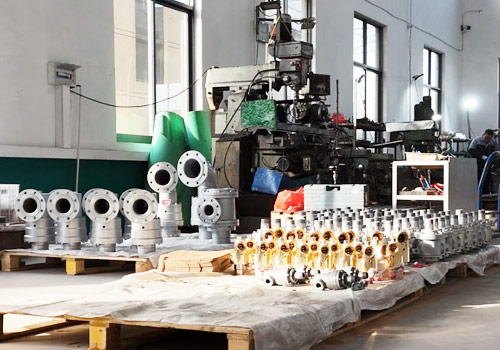
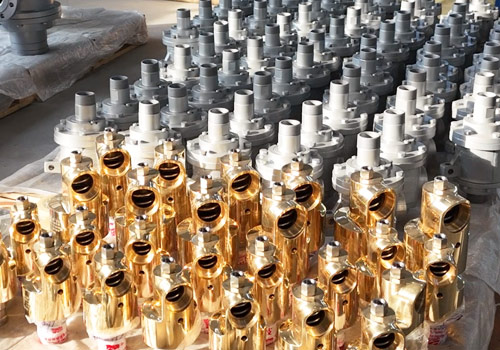
Custom solutions are the backbone of several high-performance industries. In the plastics extrusion industry, cooling water must be fed into rotating screws and rollers with absolute precision to maintain the material’s structural integrity. In the printing and packaging sector, large cooling drums rely on a rotary joint for water to maintain a constant temperature across wide webs of paper or film.
Automated worktables and robotic arms in the automotive industry also utilize these joints to provide water cooling to welding tips or spindle motors. In these high-cycle environments, the joint might experience thousands of movements per day. Only a component built with aerospace-grade seals and precision bearings can withstand such a workload without leaking. These applications prove that the right fluid connection is not just a part; it is a performance enabler for the entire production line.
Kesimpulan
Sourcing the right rotary joint for water for an industrial OEM project requires a balance of technical expertise and a clear understanding of the operational environment. By prioritizing aerospace-grade sealing materials, high-precision mechanical support, and advanced surface treatments, you can ensure that your fluid systems are as robust as the machines they power. Whether you are dealing with low-speed oscillations or high-pressure cooling, a customized approach to rotary joint selection is the surest way to achieve long-term reliability and operational excellence.
Tanya Jawab Umum
What are the primary benefits of customizing a rotary joint for water in OEM projects?
Customization allows you to match the rotary joint’s dimensions, mounting interfaces, and material specifications exactly to your machine’s design. This eliminates the need for bulky adapters, reduces potential leak points, and ensures the joint can handle specific motion profiles like reciprocating swing or low-speed rotation that standard off-the-shelf models might not support.
Why is aerospace-grade sealing critical for industrial water applications?
Industrial water often contains minerals, additives, or temperature fluctuations that can degrade standard rubber seals. Aerospace-grade sealing rings are engineered for superior thermal stability and chemical resistance. This ensures a leak-proof interface and significantly extends the service life of the rotary joint for water, even in high-pressure or continuous-duty cycles.
How does full-body electroplating protect a rotary joint for water?
In many industrial environments, moisture and chemical splashes can cause external oxidation and pitting. Full-body electroplating provides a uniform, corrosion-resistant barrier across all surfaces of the joint, including threads and recessed areas. This protection prevents the component from seizing and maintains a professional appearance for the lifespan of the OEM equipment.
What role do high-precision bearings play in a rotary joint for water?
High-precision bearings ensure that the internal shaft remains perfectly aligned with the housing during rotation. In a rotary joint for water, any misalignment can cause uneven pressure on the seals, leading to premature failure. Precision bearings minimize vibration and reduce rotational torque, which protects both the joint and the machine’s drive motor.
Can a rotary joint for water be designed for both cooling and heating cycles?
Yes. By utilizing specialized sealing materials and housing alloys like 316L stainless steel, a custom rotary joint for water can be engineered to handle a wide temperature range, from chilled water to hot process water (up to 120°C or higher). It is essential to specify your maximum and minimum operating temperatures during the design phase to ensure material compatibility.
Terbaru Berita
Wawasan & Inovasi
