


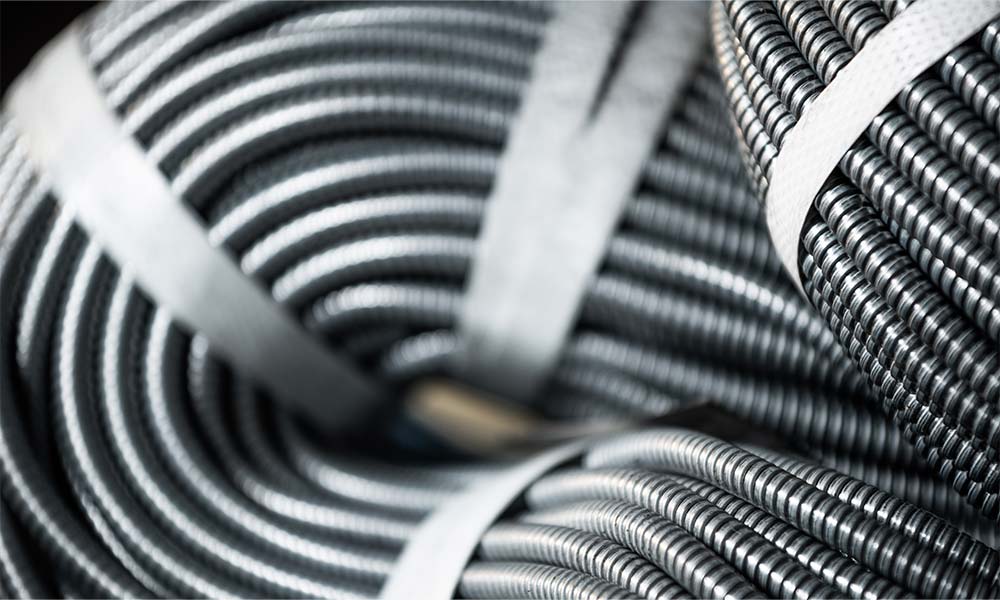
In the demanding world of industrial thermal management, high-pressure steam represents one of the most volatile and destructive media a piping system can carry. When your facility relies on constant steam flow for power, heating, or processing, the physical connection between your main headers and moving machinery becomes a critical point of failure. Selecting the best metal hose is not merely a matter of finding a flexible pipe; it is about engineering a multi-layered pressure vessel capable of withstanding extreme thermal expansion, aggressive internal corrosion, and constant mechanical vibration. This guide explores the technical benchmarks that separate standard flexible hoses from industrial-grade solutions optimized for steam integrity.
Daftar isi
The Steam Challenge and the Cost of Failure
High-pressure steam systems operate under a unique set of stressors. Unlike hydraulic oil or compressed air, steam carries latent heat that causes rapid expansion in metal corrugations. If a hose is poorly specified, this thermal cycling leads to metal fatigue in surprisingly short order. A minor steam leak might seem like a small nuisance, but according to industrial energy audits, a single 3mm hole in a 7-bar steam line can waste thousands of dollars in energy costs annually, not to mention the severe safety risks to personnel working nearby. Identifying the best metal hose starts with acknowledging that the cost of the component is negligible compared to the cost of unplanned downtime or a localized system explosion.
Material Integrity: Why 316L Stainless Steel is the Industry Standard
While 304 stainless steel is common in general industrial applications, the best metal hose for steam is almost always constructed from 316L stainless steel. The “L” stands for low carbon, which is essential for preventing sensitization during the welding of end fittings. More importantly, 316L contains molybdenum. This specific alloying element provides a defense mechanism against pitting corrosion, which frequently occurs in steam condensate where impurities and oxygen levels fluctuate.
In high-temperature environments exceeding 600 degrees Celsius, 316L maintains its structural yield strength far better than lower-grade alloys. When you evaluate a supplier, always ask for the Mill Test Report (MTR). Professional-grade assemblies will have documented chemical compositions that prove the material can handle the “acidic” nature of condensed steam without developing the microscopic cracks that lead to catastrophic failure.
Annular vs. Helical Corrugations: Selecting the Best Metal Hose Geometry
The geometry of the internal bellows is a technical detail that many procurement managers overlook, yet it dictates how the hose handles pressure. There are two primary types: helical (spiral) and annular (independent rings). For high-pressure steam, the annular design is widely recognized as the best metal hose configuration.
In an annular hose, each corrugation is a complete circle arranged in parallel. This design allows the hose to expand and contract along its longitudinal axis without the twisting motion inherent in helical designs. Under high pressure, helical hoses tend to “walk” or elongate, putting unnecessary stress on the end fittings. Annular corrugations distribute the internal pressure evenly across each ring, which significantly improves the fatigue life of the metal when subjected to the harmonic vibrations common in steam manifolds.
The Critical Role of Double-Braided Reinforcement for High Pressure
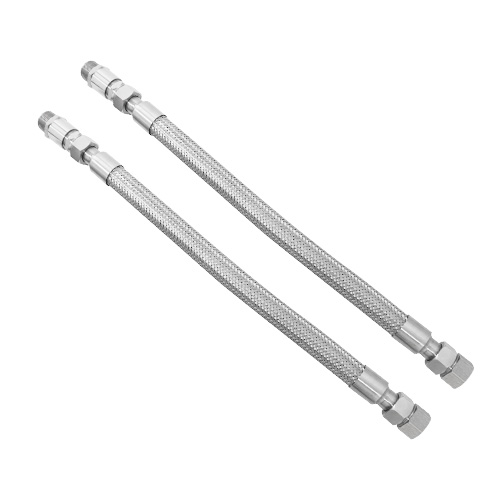
A corrugated bellows on its own has very little pressure resistance; it would simply stretch out like a spring under load. To transform these bellows into a high-pressure tool, a stainless steel wire braid is woven over the exterior. The best metal hose for steam applications often utilizes a double-braided reinforcement.
This second layer of high-tensile wire braid acts as a secondary pressure carrier, effectively doubling the burst pressure rating of the assembly. It also provides a heavy-duty shield against external mechanical abrasion. In a crowded boiler room, hoses are often bumped by tools or rub against adjacent pipes. A double braid ensures that the delicate inner bellows remains protected from external impact while maintaining a 4:1 safety factor—a standard safety margin where the burst pressure is at least four times the maximum working pressure.
Technical Specifications: Pressure Ratings and Selection Guide
When sourcing components, you need a clear comparison of how different configurations handle the rigors of steam. Below is a technical summary of the performance metrics found in premium metal hose assemblies.
| Fitur | Standard Flexible Hose | Professional Steam Grade | Performance Impact |
| Core Material | 304 Stainless Steel | 316L Stainless Steel | Enhanced corrosion and heat resistance |
| Bellows Profile | Helical (Spiral) | Annular (Parallel) | Superior thermal expansion handling |
| Reinforcement | Single Layer Braid | Double Layer Braided | Higher burst pressure and safety margin |
| Peringkat Tekanan | Up to 25 Bar | 70+ Bar (1000+ PSI) | Reliability in high-pressure steam |
| Kisaran Suhu | Up to 300°C | Up to 600°C+ | Prevents alloy work-hardening |
| Sertifikasi | Basic QC | ISO 10380 / ASME | Compliance with global safety standards |
| Fitting Purge | No Purge | Argon-Purged TIG Weld | Prevents oxidation at weld joints |
| Cycle Life | Low to Medium | High (Thousands of cycles) | Reduces frequency of replacements |
Understanding Fatigue Life and Thermal Cycling in Steam Lines
Steam systems are rarely static; they are characterized by constant start-stop cycles. Every time a steam valve opens, the hose undergoes a rapid temperature spike, causing the metal to expand. When the valve closes, the hose cools and contracts. This “thermal cycling” is the primary killer of metal hoses.
The best metal hose is engineered to stay within the elastic limit of the metal during these cycles. Technical research into metal fatigue indicates that hoses with a higher number of corrugations per foot generally offer better flexibility and a longer cycle life because the stress of each bend is distributed across more surface area. If your application involves constant movement, such as a steam-heated press, you must specify a “high-flex” or “close-pitch” annular hose to ensure the metal does not work-harden and become brittle over time.
Installation Precision: Calculating the Minimum Bend Radius
You can buy the most expensive hose on the market, but if it is installed incorrectly, it will fail within weeks. Every hose has a Minimum Bend Radius (MBR), which is the tightest curve the hose can maintain without deforming the corrugations. For the best metal hose performance, you must distinguish between a static bend (where the hose is fixed in one curved position) and a dynamic bend (where the hose moves during operation).
In dynamic applications, the MBR should be significantly larger to account for the added stress of motion. Furthermore, you must avoid torsion at all costs. Twisting a metal hose during installation creates a shearing force on the corrugations that the metal is not designed to handle. Using “backup wrenches” during the tightening of threaded fittings or ensuring flange holes are perfectly aligned before bolting are simple steps that protect your investment.
End Fitting Selection: Ensuring a Leak-Proof Connection
The connection between the hose and the fitting is often where leaks begin. For steam, TIG (Tungsten Inert Gas) welding is the mandatory standard. The best metal hose assemblies are argon-purged during the welding process. This means that oxygen is removed from the inside of the tube while the weld is being made, preventing “sugar” or oxidation on the back of the weld.
Oxidation inside a steam hose creates a rough surface where minerals can collect, eventually leading to localized corrosion. Whether you choose carbon steel or stainless steel flanges, the quality of the weld determines the overall pressure integrity of the unit. For high-vibration environments, threaded connections should be avoided in favor of flanged or stub-end fittings, which provide a more rigid and reliable seal over thousands of hours of operation.
Certification and Quality Assurance: The ISO 10380 Standard
In the B2B world, trust is verified through certification. The international benchmark for the best metal hose is the ISO 10380 standard. This standard dictates rigorous testing protocols, including cycle life tests where the hose must withstand a specific number of bends under pressure without leaking.
Before accepting a shipment of steam hoses, ensure they have undergone Non-Destructive Testing (NDT). This typically involves a hydrostatic pressure test at 1.5 times the working pressure or a helium leak test for vacuum-critical applications. These tests ensure that there are no pinhole leaks in the longitudinal seam weld of the bellows. Reliable suppliers will provide a Certificate of Conformance, giving you peace of mind that the product meets the safety requirements of your specific industrial sector.
Investing in Reliability for Long-Term Steam Efficiency
Sourcing the best metal hose is a strategic investment in your facility’s operational uptime. While the initial cost of a 316L, double-braided, annular hose may be higher than a generic alternative, the long-term ROI is found in the absence of repairs and the preservation of energy. By focusing on material grade, corrugation geometry, and proper installation techniques, you can transform a potential weak point in your system into a reliable, long-lasting asset.
When you evaluate your next steam project, remember that the “best” choice is the one that accounts for the hidden stresses of thermal cycling and internal corrosion. Prioritizing engineering excellence today prevents the costly emergencies of tomorrow.
Kesimpulan
Selecting the best metal hose is ultimately a strategic investment in your facility’s operational uptime and personnel safety. While the initial cost of a 316L stainless steel, double-braided, annular hose may be higher than generic alternatives, the long-term ROI is found in the significant reduction of unplanned maintenance and the preservation of thermal energy. By prioritizing superior material grades, optimized corrugation geometry, and precise installation techniques, you transform a potential weak point in your steam circuit into a durable, high-performance asset. In the world of high-pressure steam, engineering excellence today is the only way to prevent the costly and dangerous emergencies of tomorrow.
Tanya Jawab Umum
Why is 316L stainless steel considered the best material for steam hoses?
316L stainless steel contains molybdenum, which provides superior resistance to pitting and crevice corrosion compared to 304 grade. According to metallurgical standards, the “L” (low carbon) designation is also critical because it prevents carbide precipitation during welding, ensuring the joints remain strong and leak-proof even under continuous thermal cycling.
What is the advantage of an annular design in a high-pressure metal hose?
The best metal hose for steam usually features an annular profile, where the corrugations are independent, parallel rings. Unlike helical (spiral) designs, annular hoses do not twist or “walk” when pressurized. This structural stability allows the hose to absorb longitudinal thermal expansion more efficiently, which is a primary requirement for high-pressure steam lines.
How does a double-braided layer enhance the safety of the best metal hose?
While the inner bellows provides flexibility and a leak-proof barrier, the braid acts as the pressure-carrying component. A double-braid configuration significantly increases the hoop strength and burst pressure of the assembly. For industrial steam applications, this provides a necessary safety factor (typically 4:1), ensuring the hose can handle unexpected pressure spikes without failing.
What is the “Minimum Bend Radius” and why does it matter for installation?
The Minimum Bend Radius (MBR) is the tightest curve a hose can safely maintain without deforming the internal corrugations. To keep the best metal hose in peak condition, you must ensure the installation does not exceed this limit. Over-bending leads to localized stress concentrations and “work hardening” of the metal, which eventually causes the bellows to crack and leak.
Can a metal hose be used for both high-vibration and high-temperature environments?
Yes, this is where the best metal hose truly excels compared to rubber or PTFE alternatives. Because it is constructed entirely of high-grade alloys, it maintains its mechanical integrity at temperatures up to 600°C. When combined with precision-engineered bellows that dampen harmonic resonance, these hoses are the ideal solution for connecting vibrating equipment like pumps or compressors to steam manifolds.
Terbaru Berita
Wawasan & Inovasi
