



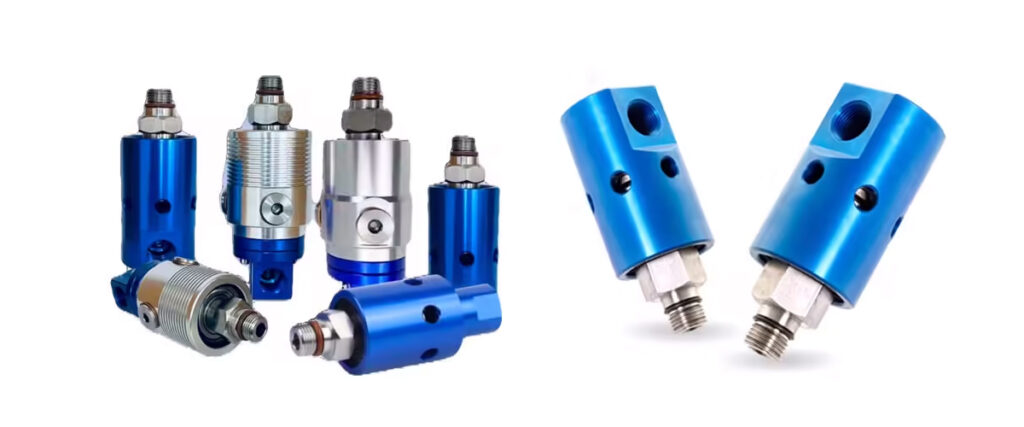
Table of Contents
Introduction
If you work with heavy machinery, you know the critical role hydraulics play. You’ve also likely faced the frustration of a leak in a component that’s supposed to bring flexibility to your system. That component is often the hydraulic swivel joint.
These unassuming parts are the unsung heroes that allow fluid power to be transmitted smoothly between fixed and rotating parts of your machine. When they work, everything moves as it should. When they fail, it can mean costly downtime, messy leaks, and lost productivity.
This guide is designed to be your go-to resource. We’re going beyond a simple definition to give you a comprehensive, engineer-level look at how to select, maintain, and troubleshoot hydraulic swivel joints for maximum performance and longevity.
What Exactly Is a Hydraulic Swivel Joint?
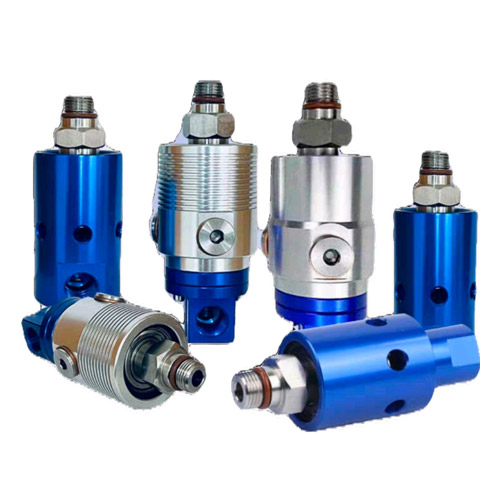
Think of a hydraulic swivel joint as a sophisticated, heavy-duty hinge for your hydraulic lines. Its sole purpose is to transfer hydraulic fluid from a stationary port (like on a machine frame) to a rotating part (like a boom, grapple, or platform), all while maintaining a tight, high-pressure seal.
Without it, hydraulic hoses would twist, kink, and fail prematurely. The swivel joint introduces a point of controlled rotation, protecting your system and ensuring consistent power flow. You’ll find them everywhere—from the 360-degree rotating excavator arm to the complex automation in a plastic injection molding machine.
Beyond the Basics: How a High-Performance Swivel Joint Really Works
Most people understand the basic rotating concept. But the real engineering magic lies in the internal sealing and bearing mechanism.
Inside a typical hydraulic swivel joint, you’ll find precision-machined components:
- Rotating Spool and Housing: The core rotating assembly.
- Dynamic Seals: These are the heart of the joint. Materials like polyurethane or PTFE are often used for their excellent wear resistance and compatibility with various hydraulic fluids. The design of these seals—whether O-ring, lip seal, or a proprietary profile—is what separates a mediocre joint from a great one.
- Bearings: To handle not just rotational forces but also substantial radial and axial loads. A robust bearing system is what allows the joint to support the weight of the attached components without binding.
The precision with which these parts are manufactured and assembled dictates the joint’s pressure rating, its leak resistance over millions of cycles, and its overall service life.
How to Select the Right Hydraulic Swivel Joint: A 5-Point Checklist
Selecting the wrong joint is the number one cause of premature failure. Don’t just match the thread size. Use this checklist to ensure a perfect fit for your application.
- Pressure & Flow Requirements: This is your starting point. Know your system’s maximum operating pressure and peak flow rate (in GPM or L/min). The joint must be rated to handle both without causing a significant pressure drop or generating excess heat.
- Media Compatibility: What hydraulic fluid are you using? Standard mineral oil, biodegradable fluid, or fire-resistant fluid? The internal seals must be chemically compatible to prevent swelling, degradation, and failure.
- Load Capacity (Radial & Axial): This is a critical but often overlooked factor. Will the joint be supporting the weight of the hoses or other components? According to analysis of bearing failure modes in rotary unions, excessive radial load is a leading cause of premature bearing seizure and seal wear. You must specify a joint designed to handle these mechanical stresses.
- Rotation & Movement Range: Does your application require continuous 360° rotation, or is it limited to a specific arc (e.g., ±180°)? Some joints are built for multi-plane movement (e.g., 2-way or 3-way), while others are for single-plane rotation.
- Environmental Conditions: Will the joint be exposed to extreme temperatures, abrasive dust, saltwater, or constant vibration? These factors will dictate the need for special coatings, seal materials, or protective covers.
Solving the Most Common Problems: A Troubleshooter’s Guide
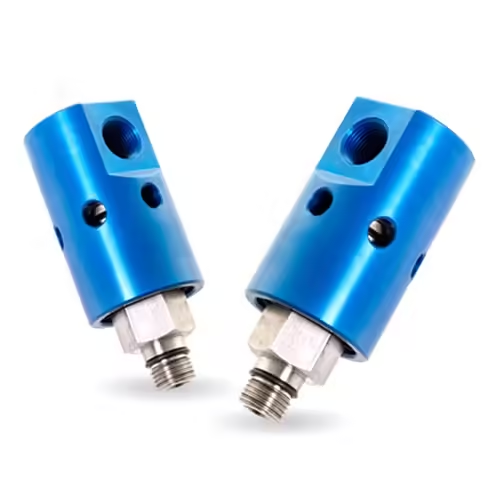
Even the best swivel joint will eventually show signs of wear. Here’s how to diagnose the most common issues.
- Problem: External Leakage.
- Likely Causes: Worn primary dynamic seals, damaged seal surfaces from contamination, or cracked housing due to excessive side load.
- Solution: Inspect for embedded contamination on the seal surfaces. If the sealing surface is scored, the joint likely needs rebuilding or replacement. Ensure the system is clean.
- Problem: Stiff or Erratic Rotation.
- Likely Causes: Contaminated fluid has damaged the bearing races or balls, internal failure has caused seal binding, or the joint was not properly lubricated during assembly.
- Solution: This often requires disassembly and inspection. Look for pitting in the bearings or scored surfaces. Flushing the hydraulic system is critical to prevent a recurrence.
- Problem: Excessive Play or “Wobble.”
- Likely Causes: This is a classic sign of bearing failure, typically from overloading or fatigue.
- Solution: The joint requires immediate service or replacement to prevent a catastrophic disconnect.
Proactive Maintenance: How to Drastically Extend Service Life
Reactive maintenance costs you more in the long run. A proactive approach saves money and downtime.
- Daily/Pre-Shift: Visually inspect for leaks and listen for unusual grinding or clicking sounds during operation.
- Weekly/Monthly: Check for any increase in rotational resistance or mounting looseness.
- Annual/By Hour Meter: Consider a proactive rebuild or replacement based on your specific operating hours and severity of service. Rebuilding with a genuine seal kit is far more cost-effective than replacing the entire unit and dealing with unplanned machine downtime.
The Future is Smart: Where Swivel Joint Technology is Headed
The industry is not standing still. The next generation of hydraulic swivel joints is integrating smart features. Imagine a joint with an embedded sensor port that monitors seal health, temperature, and rotation speed. This data can feed into a predictive maintenance system, alerting you to service the joint before it fails. While not yet the standard, this technology is moving from high-value industrial applications into broader markets, promising a future with even greater machine uptime.
Your Next Step: Partner with Experts Who Understand the Engineering
Choosing and maintaining hydraulic swivel joints is more than a parts-swapping exercise. It’s about understanding the interplay of hydraulics, mechanics, and your specific operational demands.
At Shandong Xiandai Sealing Technology Equipment Co., Ltd., we don’t just sell components. We provide engineered solutions. Our specialists have decades of combined experience in solving the toughest hydraulic connectivity challenges across a wide range of industries.
Ready to eliminate swivel joint failures and boost your machine’s reliability?
Contact our technical team today for a free, no-obligation application review. We’ll help you select the perfect joint and provide a maintenance plan tailored to your operation.
FAQ
What is the typical lifespan of a hydraulic swivel joint?
There is no single answer, as lifespan depends on operating pressure, speed, fluid cleanliness, and load. In a clean, well-maintained system operating within its design specs, a joint can last for several thousand hours. In harsh, high-load environments, service intervals will be shorter.
Can I repair a leaking hydraulic swivel joint myself?
Many manufacturers offer repair kits with the necessary seals and O-rings. However, successful repair requires a clean workspace, proper tools, and knowledge of the assembly procedure. For critical applications, sending the unit to a specialist or opting for a certified exchange is often the safer choice.
How important is the rotation speed (RPM) rating?
Extremely important. Exceeding the rated RPM can cause centrifugal forces that prevent the dynamic seals from functioning correctly, leading to immediate leakage and failure from inadequate lubrication of the bearings.
What’s the difference between a hydraulic swivel joint and a rotary union?
The terms are often used interchangeably. Generally, “hydraulic swivel joint” is preferred in mobile equipment and high-pressure fluid power contexts, while “rotary union” might be used more broadly for other media (air, water, steam) and in industrial stationary equipment.
Latest News
Insights & Innovation
