




Table of Contents
When you work with high-pressure hydraulic systems, failure is rarely dramatic—it’s expensive, disruptive, and often avoidable. Leaks, vibration damage, unexpected downtime, or premature fatigue usually trace back to one overlooked component: the hose assembly. If you’re specifying or maintaining a hydraulic metal hose, your decisions directly affect system safety, efficiency, and lifecycle cost.
This guide is written from a practical, user-focused perspective. Whether you’re designing new equipment, upgrading an existing hydraulic circuit, or troubleshooting recurring hose failures, you’ll learn how hydraulic metal hoses really perform in the field—and how to select them with confidence.
Why Hydraulic Metal Hose Is Gaining Popularity in Modern Systems
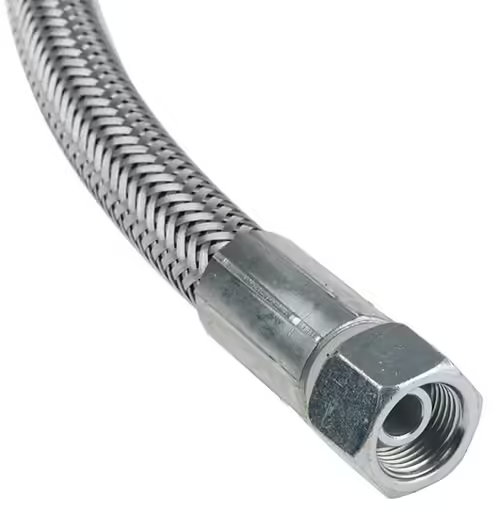
Traditional rubber hydraulic hoses still dominate many applications, but metal alternatives are increasingly chosen for environments where rubber simply doesn’t survive. Hydraulic metal hose assemblies are engineered to handle extreme pressure, temperature fluctuation, vibration, and chemical exposure without degradation.
According to material performance data summarized by the American Society of Mechanical Engineers (ASME), metallic flexible hoses maintain mechanical integrity at temperatures where elastomeric materials lose strength or harden prematurely. This is one of the key reasons metal hoses are preferred in critical hydraulic circuits.
If your system experiences any of the following, a hydraulic metal hose is worth serious consideration:
- Continuous high operating pressure
- Pulsating pressure or pressure spikes
- Elevated ambient or fluid temperature
- Aggressive hydraulic fluids
- Constant vibration or movement
Understanding the Structure of a Hydraulic Metal Hose
Before you can select the right hose, it helps to understand how a hydraulic metal hose is built.
Most designs consist of three primary elements:
- A thin-walled corrugated metal tube that provides flexibility
- One or more layers of braided metal wire for pressure containment
- End fittings that connect the hose to the hydraulic system
The corrugation profile determines flexibility and fatigue resistance, while the braid determines pressure rating. Engineering references from Parker’s Hose and Tubing Technical Handbook note that increasing braid layers raises pressure capacity but reduces flexibility.
You can review general hose construction principles via this reference: metal hose construction basics
Key Performance Advantages Over Rubber Hydraulic Hoses
Pressure Capability
A properly designed hydraulic metal hose can withstand working pressures several times higher than comparable rubber hoses of the same diameter. This makes metal hoses suitable for compact, high-pressure hydraulic designs.
Temperature Resistance
Metal hoses tolerate extreme temperatures without embrittlement or softening. Engineering studies compiled by Engineering Toolbox show stainless steel hoses operating safely well beyond the thermal limits of elastomeric hoses.
Chemical Compatibility
Unlike rubber compounds, metal hoses are largely unaffected by oils, synthetic fluids, and many aggressive chemicals. This minimizes long-term material degradation.
Fire Safety
Metal hoses do not burn, melt, or emit toxic smoke. In safety-critical installations, this characteristic alone justifies their use.
Common Failure Causes—and How to Avoid Them
Even the best hydraulic metal hose can fail prematurely if misapplied. Field failure analysis consistently points to a few repeat mistakes.
Overbending
Metal hoses have a defined minimum bend radius. Exceeding it introduces stress concentrations that lead to fatigue cracks.
Torsional Stress
Hydraulic metal hoses are designed to flex, not twist. Torsion during installation is one of the fastest ways to shorten service life.
Vibration Without Support
Uncontrolled vibration amplifies cyclic stress. Industry maintenance guidelines published by Hydraulic Institute emphasize the importance of proper clamping and routing.
Selecting the Right Hydraulic Metal Hose for Your Application
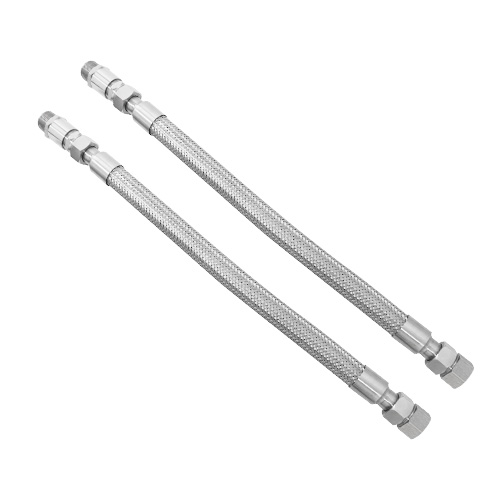
Choosing the correct hose is not about selecting the strongest option—it’s about selecting the most appropriate one.
Key Selection Factors
- Working pressure and surge pressure
- Operating temperature range
- Required flexibility and movement cycles
- Media compatibility
- Installation geometry
To support faster decision-making, the table below summarizes how different design priorities influence hose selection.
| Design Requirement | Hose Feature to Prioritize | Engineering Impact |
|---|---|---|
| High pressure | Multi-layer braid | Increases burst safety margin |
| Tight routing | Fine corrugation | Improves flexibility |
| Long service life | Low stress routing | Reduces fatigue cycles |
| High temperature | All-metal construction | Prevents thermal degradation |
| Pulsating flow | Balanced braid design | Minimizes pressure-induced motion |
Real-World Application Case: Solving Repeated Hose Failures
In one industrial hydraulic press system, repeated rubber hose failures occurred every 6–8 months. The root cause was a combination of pressure spikes and constant vibration.
After switching to a properly specified hydraulic metal hose with double stainless braid and improved routing, service life exceeded four years without leakage or fatigue damage. Maintenance logs showed a significant reduction in downtime and replacement cost.
This type of outcome aligns with reliability data summarized in ISO 10380, the international standard for metallic hose assemblies.
Installation Best Practices That Extend Hose Life
Even the correct hose can fail if installed incorrectly. When installing a hydraulic metal hose, follow these proven practices:
- Maintain minimum bend radius under all operating conditions
- Avoid torsion by aligning fittings before tightening
- Use proper supports to control vibration
- Allow axial movement where thermal expansion occurs
Field studies referenced by Plant Engineering show that correct installation alone can double hose service life.
Maintenance and Inspection Strategies
Hydraulic metal hoses do not require frequent replacement, but they do require inspection. Look for:
- Broken or flattened braid wires
- Visible deformation of corrugations
- Signs of leakage at end fittings
Periodic inspection aligned with your system’s maintenance schedule helps prevent unexpected failures and supports predictive maintenance planning.
Cost Considerations: Initial vs Lifecycle Value
While the initial cost of a hydraulic metal hose is higher than rubber alternatives, lifecycle cost analysis often favors metal hoses. Reduced downtime, fewer replacements, and improved system reliability quickly offset the upfront investment.
Engineering cost models published in Maintenance Technology Magazine indicate that component lifecycle cost often outweighs purchase price by a factor of five or more.
Final Thoughts
A hydraulic metal hose is not just a component—it’s a reliability decision. When selected, installed, and maintained correctly, it becomes one of the most durable elements in your hydraulic system. By understanding how these hoses behave under real operating conditions, you can reduce risk, control maintenance cost, and improve overall system performance.
If you’re evaluating options or solving recurring hose issues, focusing on application-specific requirements rather than generic specifications will always lead to better results.
FAQ
What pressure range can a hydraulic metal hose handle?
Pressure capacity depends on diameter, braid layers, and material. Properly designed hoses routinely handle very high working pressures with appropriate safety factors.
Are hydraulic metal hoses flexible enough for moving equipment?
Yes, when correctly specified. Corrugation design and bend radius selection are critical.
Can metal hoses replace rubber hoses in all systems?
Not always. Metal hoses excel in demanding conditions but may be unnecessary in low-pressure, static applications.
How long does a hydraulic metal hose last?
With correct selection and installation, service life often exceeds several years, even in harsh environments.
Do metal hoses require special fittings?
End fittings must be compatible with both the hose design and system connection standards.
Latest News
Insights & Innovation
