
-
هاتف: +86-13581108878
-
بريد إلكتروني: [email protected]



جدول المحتويات
مقدمة
Choosing the right swivel joint is a common challenge for engineers and maintenance teams. With varying pressures, rotation speeds, media types, misalignment levels, and sealing requirements, selecting the proper structure can directly affect system life, safety, and efficiency. A wrong choice may lead to premature leakage, downtime, and increased maintenance costs.
This guide breaks down the engineering principles behind swivel joint selection and provides practical evaluation tools to help you make the right decision quickly and confidently.
فهم ما هو المفصل الدوار Does
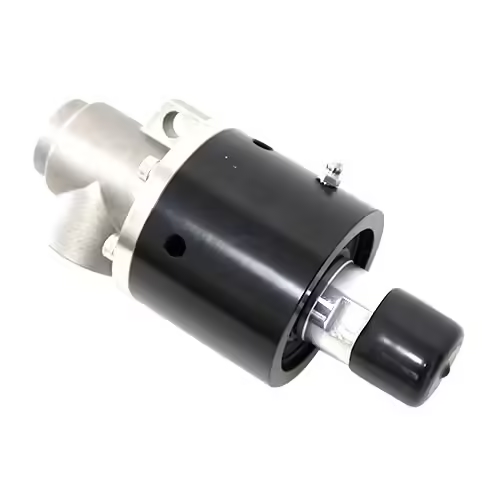
A swivel joint enables rotation between two connected components while allowing continuous fluid, gas, or slurry transfer. It prevents hose twisting, reduces stress loads, and extends system life. Data from industrial hose failure reports shows that more than 70% of premature hose failures are linked to torsional stress—something a proper rotating union can prevent.
Typical applications include:
- Fluid loading arms
- Hydraulic machinery
- Industrial hoses and piping
- Chemical processing systems
- Offshore and mining equipment
Key Factors to Consider When Selecting a المفصل الدوار
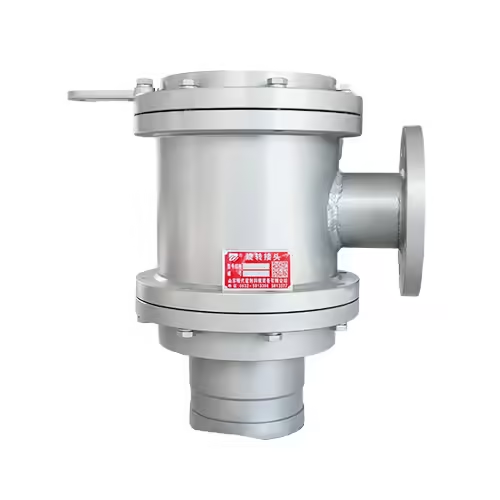
Operating Pressure and Load
Pressure rating is the most critical factor. An underrated rotating union can deform or leak under cyclic loads.
Industry data suggests that for safe performance, the working pressure of a rotating union should offer at least a 1.5x safety margin above the system operating pressure.
توافق الوسائط
The transported medium affects body material, seal material, and bearing design.
Common media categories:
- Water and steam
- Chemicals and acids
- Oils and hydrocarbons
- Slurries or abrasive fluids
- Gas applications
Material selection directly impacts service life and corrosion resistance.
Rotation Speed and Frequency
High-speed or continuous rotation requires low-friction bearings and robust seal geometry. For example:
- Slow oscillation (<20 RPM): Standard bearing
- Medium rotation (20–200 RPM): Precision ball bearing
- High rotation (>200 RPM): Specialized high-speed rotating union
Misalignment and Installation Conditions
Swivel joints are designed to absorb some movement, but excessive misalignment causes severe wear.
If misalignment is expected, multi-plane or multi-path rotating unions should be considered.
نطاق درجة الحرارة
Seal and metal materials must match the temperature window.
- Elastomer seals: typically -20°C to 120°C
- PTFE seals: up to 250°C
- Graphite seals: up to 450°C
Maintenance & Lifecycle Expectations
For operations requiring long service life with minimal downtime, selecting bearing-supported and cartridge-sealed rotating unions significantly reduces maintenance frequency.
Comparison Table for Swivel Joint Selection
The following table helps quickly identify the suitable type based on technical criteria:
| المعلمة | Light-Duty Swivel Joint | Standard Industrial Swivel Joint | Heavy-Duty Swivel Joint |
|---|---|---|---|
| Typical Pressure | Low to medium | Medium to high | Very high / shock load |
| Suitable Media | Water, air | Oil, steam, mild chemicals | Abrasives, corrosives |
| سرعة الدوران | قليل | واسطة | Low to medium |
| Seal Options | Basic elastomers | Elastomer / PTFE | PTFE / metal-to-metal |
| التطبيقات | General hoses | معدات المعالجة | Harsh industrial environments |
| Expected Service Life | معتدل | Long | Longest |
This table allows buyers or engineers to visually match their system to a rotating union category within seconds.
Matching Swivel Joint Type to Application Requirements
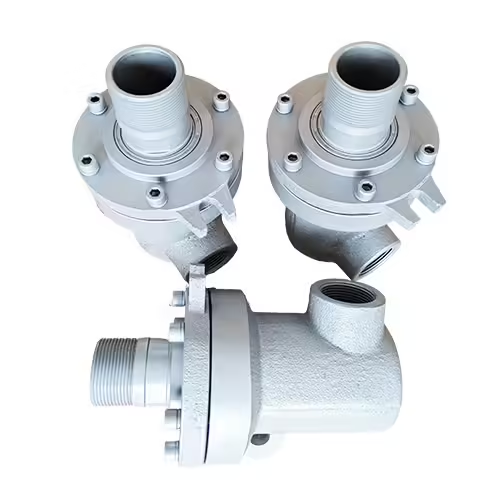
الأنظمة الهيدروليكية
Hydraulic rotating unions must withstand high pressures, frequent start-stop movements, and rapid rotational changes. Using hardened steel bodies combined with PTFE seals helps prevent wear and leakage while ensuring smooth fluid transfer. Proper selection reduces downtime and maintenance costs and extends the operational life of the system, especially in demanding industrial environments.
المعالجة الكيميائية
In chemical processing, media compatibility is critical. Swivel joints made from corrosion-resistant stainless steel or alloys, paired with PTFE or FKM seals, provide robust protection against aggressive chemicals. This ensures long-term reliability, prevents contamination, and reduces the risk of costly system failures, making them ideal for processing acids, bases, and other reactive fluids.
High-Temperature Applications
High-temperature applications require rotating unions that can endure extreme heat without compromising performance. Graphite seals or metal-to-metal sealing solutions maintain stability and prevent deformation under thermal stress. Combined with durable construction materials, these joints provide long-lasting operation in furnaces, steam systems, and other high-heat environments while minimizing maintenance needs.
Abrasive or Slurry Applications
Swivel joints in abrasive or slurry environments face constant wear from particles and high-density fluids. Heavy-duty joints with reinforced bearings and abrasion-resistant metallurgy ensure longer life, reduce downtime, and maintain reliable performance. Proper material and design selection minimizes the risk of leaks and failures, keeping operations efficient even under harsh, abrasive conditions.
Common Mistakes to Avoid
Users often encounter problems because of:
- Underrated pressure selection
- Choosing the wrong seal material
- Installing without alignment consideration
- Ignoring rotation speed requirements
- Using general-purpose joints in corrosive environments
Avoiding these pitfalls can extend rotating union lifespan by 30–50%, based on industry maintenance data.
How to Size a Swivel Joint Accurately
- Identify maximum system pressure
- Define operating temperature range
- Determine media type and chemical properties
- Confirm rotation speed and frequency
- Measure allowable installation space
- Check required connection sizes
- Select material and seal combination
- Choose bearing type based on load
These steps ensure proper fit and reliable performance.
When to Consider a Custom Swivel Joint
A custom rotating union is recommended when:
- Installation space is limited
- Multiple flow paths are required
- Extreme temperatures or pressures are involved
- Specific motion profiles must be accommodated
- Standard products fail prematurely
خاتمة
Selecting the right swivel joint is not just about finding a component that fits—it’s about ensuring long-term system reliability, safety, and efficiency. By evaluating pressure, media, rotation requirements, temperature, and structural design, you can significantly reduce failure risks and maintenance costs.
If you need technical guidance or customized solutions, شركة شاندونغ شيانداي لمعدات تكنولوجيا الختم المحدودة is ready to help. Our engineering team can design, optimize, and manufacture swivel joints tailored to your application.
التعليمات
ما هو مفصل دوار تستخدم ل؟
A swivel joint allows rotation between connected components while transferring fluid or gas, preventing hose twisting and reducing stress on pipelines.
How do I choose the right rotating union?
Evaluate pressure rating, media compatibility, rotation speed, temperature limits, and installation conditions to ensure the joint matches your system’s requirements.
What materials are commonly used for rotating unions?
Typical materials include carbon steel, stainless steel, and alloy steel. The choice depends on corrosion levels, media type, and operating temperature.
How long does a swivel joint typically last?
Service life varies by application, but with proper selection and installation, a rotating union can operate for several years with minimal maintenance.
When should I consider a custom rotating union?
Consider a custom design when the system has extreme pressure, high temperature, abrasive media, special motion profiles, or limited space where standard models don’t fit.
أحدث أخبار
الرؤى والابتكار
