



Table of Contents
Introduction
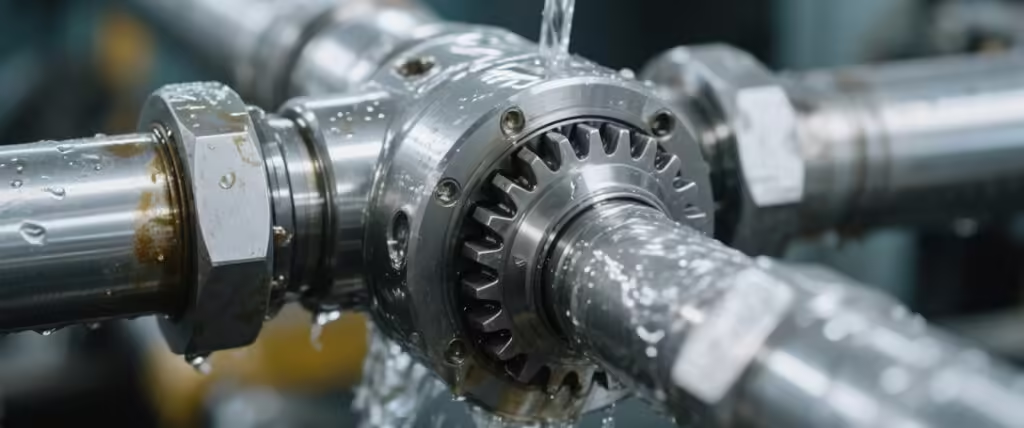
You know the sight: a hydraulic hose or connection glistening with oil, or worse, a constant drip contaminating the work area. For any operation relying on continuous fluid transfer, a leaking hydraulic rotating union isn’t just a minor annoyance—it’s a critical efficiency drain. These components, often considered the unsung heroes of your rotating machinery, are essential for transferring pressurized fluid (like hydraulic oil) from a stationary source to a rotating part of your equipment.
When a leak occurs, you face direct costs from wasted fluid, environmental cleanup, and reduced system pressure. More importantly, it signals a deeper problem that can lead to catastrophic equipment failure and costly downtime. This guide, drawing on decades of field experience, is designed to give you a comprehensive understanding of why your hydraulic rotating union is failing and, crucially, how to fix and prevent it, ensuring your system operates at peak reliability.
Leak Type and Rapid Diagnosis
The first step in any effective troubleshooting process is accurately diagnosing the source of the leak. We categorize leaks into two main types:
| Leak Type | Characteristics | Immediate Cause Indicator |
| External Leakage | Visible oil escaping the union and onto the machine or surrounding area. | Often points to failed static seals (O-rings, gaskets), housing cracks, or main seal failure. |
| Internal Leakage (Cross-Port) | Oil transferring from one fluid passage to an adjacent passage within the union, often without external signs. | Indicates severe wear or damage to the internal isolation seals, resulting in pressure and function loss. |
If you observe external leakage, you need to focus on the points where the components meet and move. If system function is degraded (e.g., slow response or incorrect cylinder speed) without visible external oil loss, suspect internal cross-port leakage.
The 5 Root Causes of Hydraulic Rotating Union Leaks
Based on our analysis of field service reports, nearly all hydraulic rotating union failures can be traced back to one of these five root causes. Understanding the ‘why’ is crucial for a lasting repair.
Seal and Bearing Degradation
The primary function of the rotating union relies on a precise seal surface and the integrity of its internal bearings. The seal, whether it’s a balanced mechanical seal or a proprietary lip seal arrangement, is under constant stress from pressure, heat, and rotation. According to manufacturer specifications, the life expectancy of most seals is finite and depends heavily on the duty cycle. When bearings wear out, they introduce radial and axial play (wobble) to the rotating shaft. This misalignment causes the seal faces to separate unevenly during operation, leading to premature localized wear, scratching, and eventual high-volume leakage.
Operating Limits Exceeded (Pressure and Speed)
Every hydraulic rotating union is rated for maximum pressure, maximum rotational speed, and maximum temperature. Exceeding these limits is a direct path to failure.
- Over-pressurization: Can physically distort the housing and compress the static seals beyond their elastic limit.
- Overspeed: Generates excessive heat at the seal face due to increased friction, causing the seal material (e.g., elastomers) to harden, crack, and lose elasticity.
- Over-temperature: High fluid temperature, often exacerbated by high speed or system heat, accelerates the chemical degradation of all elastomer seals and hydraulic oil.
Fluid Contamination
Fluid cleanliness is arguably the single most critical factor in the longevity of any hydraulic component, including the hydraulic rotating union. Contaminants—such as metallic debris from component wear, silica dust, or oxidation byproducts—act as micro-abrasives. When these particles are forced between the highly finished seal faces by the system pressure, they rapidly score and wear down the sealing surfaces. Field studies consistently show that poor filtration significantly reduces the lifespan of precision components. We advise adhering strictly to the fluid manufacturer’s cleanliness recommendation, often specified as an ISO 4406 code.
Excessive Side Loading and Misalignment
The hydraulic rotating union is designed to handle fluid transfer, not to structurally support the plumbing or the machine’s rotating elements.
- Pipe Strain: Rigid pipe connections, if improperly routed, exert significant lateral force (side load) on the union’s housing. This strain can stress the bearing mount, warp the housing, and force the internal components out of perfect concentricity, leading to seal failure.
- Incorrect Mounting: The union must be perfectly aligned with the axis of the machine it serves. A simple installation misalignment of even 0.1 millimeter can drastically shorten the seal life.
Pressure Spikes and Water Hammer
In certain demanding applications, rapid valve actuation or quick deceleration can induce momentary, severe pressure spikes (sometimes referred to as fluid hammer). These transients can exceed the union’s rating for a brief period. While standard pressure relief valves manage sustained high pressure, these instantaneous spikes can overcome the inertia of the seal assembly, briefly “lifting” the seal faces and causing an immediate, irreversible leak path.
Resolution Steps: A Professional Repair
Before any intervention, ensure the machine is safely powered down and the hydraulic rotating union system pressure has been fully relieved.
- Confirm the Root Cause: Use the diagnostics and insights above to pinpoint the actual cause. Repairing the seal without addressing bearing wear or misalignment will result in a rapid recurrence of the leak.
- Obtain Genuine Replacement Kits: Do not attempt to source generic O-rings or seals. The internal sealing elements and bearing sets are often proprietary and manufactured to extremely tight tolerances for high-pressure service. Using non-OEM components risks rapid failure due to incorrect durometer or material incompatibility with your hydraulic fluid.
- Inspect the Mounting Surfaces: Before installing the new union or kit, meticulously clean and inspect the mounting flange and shaft. Check for flatness, signs of corrosion, or damage caused by the previous failure.
- Implement Stress-Free Installation:
- Alignment: Use precision tools to verify that the axis of the new union is perfectly concentric with the machine’s axis of rotation.
- Plumbing: Connect the plumbing using flexible hoses rather than rigid piping wherever possible. This minimizes external stress on the union’s housing, allowing it to “float” slightly and accommodate minor machine movements without being subjected to pipe strain.
Preventive Maintenance for Reliability
Reliability is built on anticipation, not reaction. To maximize the operational life of your hydraulic rotating union, integrate these practices:
- Fluid Analysis: Implement a routine schedule for hydraulic fluid sampling and analysis. Early detection of contamination (particle count) or chemical degradation provides the lead time needed to change filters or fluid before damage occurs.
- Temperature Monitoring: Monitor the external temperature of the union housing. An excessive increase in temperature during operation is often the first non-visual indicator of friction-related seal wear or bearing degradation.
- Scheduled Maintenance (Condition-Based): Establish a predictive maintenance schedule based on manufacturer recommendations and your system’s duty cycle. For example, in high-speed, high-pressure applications, consider replacing the seal kits at 75% of the expected life to avoid unscheduled downtime.
- Vibration Analysis: If possible, include the rotating union in your machine’s periodic vibration analysis route. Spikes in vibration readings are a powerful early warning sign of impending bearing failure, the primary precursor to seal leaks.
By viewing your hydraulic rotating union as a precision instrument requiring specific care, you move from merely reacting to leaks to actively preventing them. If you are struggling with recurring leaks or need advice on upgrading your maintenance schedule, contact our technical support team today. We provide expert guidance and genuine replacement components to ensure your system’s maximum uptime and efficiency.
Conclusion
The reliability of your hydraulic system hinges on the integrity of the hydraulic rotating union. This guide establishes that recurring leaks are not inevitable; they are consequences of specific, preventable technical factors, most often related to bearing fatigue, fluid contamination, and installation stress (side loading). To achieve maximum system uptime and efficiency, you must shift your approach from reactive repair to proactive diagnosis.
FAQ
What is the primary function of a hydraulic rotating union?
To transfer pressurized hydraulic fluid from a stationary source to a rotating machine part without leakage.
What are the hydraulic rotating union two main types of leaks?
External leaks (fluid visible outside) and internal leaks (fluid crosses between separate internal passages).
How does fluid contamination cause hydraulic rotating union leaks?
Contaminants act as abrasives, scoring the seal faces and accelerating wear, causing rapid failure.
What installation mistake often causes failure?
Excessive pipe strain (side loading) due to rigid, misaligned piping, which stresses the union’s bearings and seals.
Latest News
Insights & Innovation
