




Welcome to My Blog!
Before we dive into the content, if you’re interested in our products or have any questions, please feel free to visit our Contact Us page on the website. Our team is ready to assist you with inquiries, orders, or any support you may need.
Now, let’s get started on our journey together. I hope you find the content here insightful, engaging, and valuable.
Table of Contents
Introduction
In today’s fast-paced industrial environment, the rotary union is a critical component that ensures the smooth transfer of fluids, steam, air, or hydraulic oil between stationary and rotating parts. Whether in manufacturing, energy, or process industries, uninterrupted flow is essential to maintaining productivity. Without a properly engineered rotary union, even the most advanced machinery could suffer from inefficiency, leaks, or costly downtime. In short, the rotary union connects moving systems seamlessly, sustaining precision, speed, and reliability across thousands of operational cycles.
High-Demand Industry Applications for the Rotary Union
The High-Speed & High-Temp Challenge in Rotary Joint Applications
Industrial systems today often operate under extreme conditions—high rotational speeds, elevated temperatures, and harsh fluid environments. From 3000 RPM CNC spindles to 350°C steam cylinders, rotary unions must perform without fail. These demands require superior materials, tight manufacturing tolerances, and advanced sealing technologies to maintain performance. As operational requirements grow, so too does the need for specialized rotary joint solutions that can withstand these intense conditions while extending service life.
Paper & Pulp: High-Speed Steam Rotary Joint for Dryer Cylinders
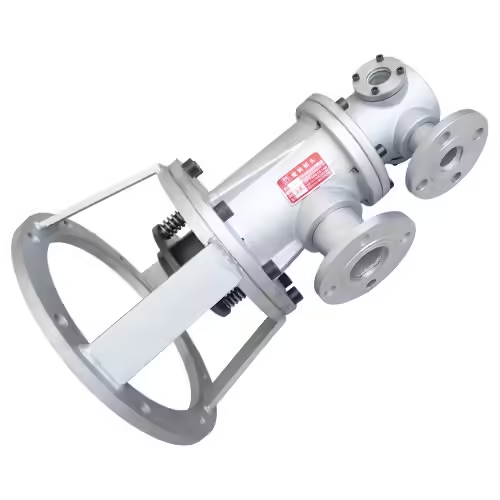
High-speed paper machine special rotary joint
Balanced seal design Multi-spring seal compensation mechanism Floating seal technology Imported antimony-impregnated seal package Weighted cantilever fixed siphon High-strength overall horizontal sheath tube Maintenance-free design High reliability and long life Suitable for all types of high-speed wide-width paper machines
| High-speed paper machine special rotary joint | |
| Maximum speed | 2000 RPM |
| Drying cylinder width | <7000mm |
| Shaft head inner diameter | <90mm |
| Drain pressure difference | <0.15 bar |
In the paper and pulp industry, rotary unions play a vital role in transferring steam into rotating dryer cylinders. These systems require high-temperature resistance and reliable sealing under pressure fluctuations. A well-designed steam rotary joint ensures consistent heat transfer, uniform drying, and minimal maintenance downtime. With proper selection, operators can prevent common issues such as steam leakage, condensation buildup, and bearing failure, achieving both efficiency and longevity in production lines.
Steel & Metallurgy: Water-Cooled Rotary Joint for Continuous Casting Machines
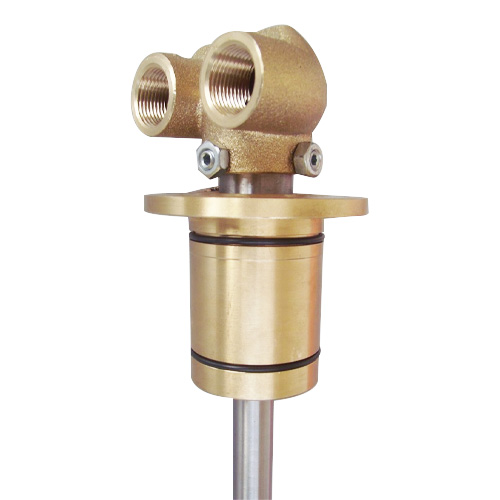
Special rotary joint for steel continuous casting machine
Balanced mechanical seal design Flat tungsten carbide seal technology Suitable for harsh environments Single-pass and double-pass designs Built-in design Maintenance-free design, no lubrication required
| Special rotary joint for steel continuous casting machine | |
| Maximum speed | 200RPM |
| Maximum temperature | 120℃ |
| Maximum pressure | 1.5MPA |
| Applicable media | Water, hydraulic oil, coolant |
Steel mills and metallurgy plants rely heavily on water-cooled rotary unions to maintain optimal operating temperatures in continuous casting and rolling equipment. These unions must handle high-pressure cooling water, resist corrosion from harsh environments, and deliver stable performance during continuous, high-speed operations. By ensuring efficient heat dissipation and reducing friction wear, advanced rotary unions help steel manufacturers maintain productivity while minimizing costly unscheduled shutdowns.
Tire & Rubber: Thermal Oil Rotary Joint for Curing Presses
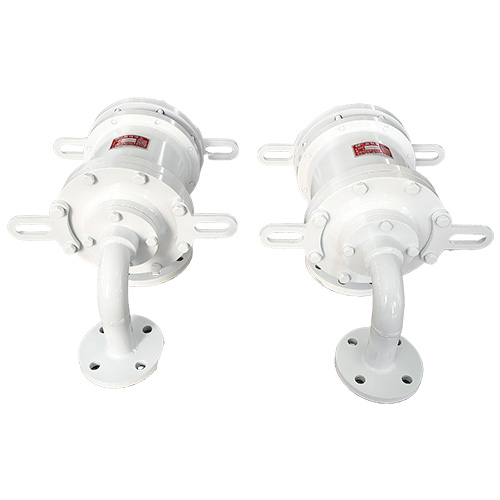
Thermal oil rotary joints
Product Features: 1. Spherical seal design 2. Standard graphite or antimony-impregnated graphite sealing materials 3. Dual oil-free bearing support 4. Maximum support spacing 5. Extended seal life and reliability 6. Easy replacement 7. Rotating or fixed siphon device 8. Four support hole design for smoother operation
| Thermal oil rotary joint | |
| Maximum speed | 180RPM |
| Maximum temperature | 350℃ |
| Maximum pressure | 1.85MPa |
| Applicable media | High temperature oil (steam, water) |
In tire and rubber manufacturing, precision temperature control during vulcanization is critical. Thermal oil rotary unions enable the transfer of heat through high-temperature media, maintaining uniform curing and ensuring product consistency. These rotary joints must resist thermal shock, handle viscous oils, and offer long-term reliability. For Indonesian rubber processing plants, using high-quality rotary unions designed for hot oil applications ensures better cycle times, energy savings, and reduced maintenance.
Technical Challenges Solved by Advanced Rotary Union Design
Mitigating Leakage and Wear: The Importance of Precision Sealing in a Rotary Joint
One of the most common challenges in rotary union performance is leakage—a problem often caused by improper seal material or misalignment. Modern Sealing’s rotary joint designs address this by integrating precision-engineered graphite, carbon, or ceramic seals that maintain contact integrity even under variable temperature and pressure. This ensures a reliable seal with minimal wear, improving both safety and lifespan.
The Complexity of Multi-Media Transfer: Custom Multi-Channel Rotary Union Solutions
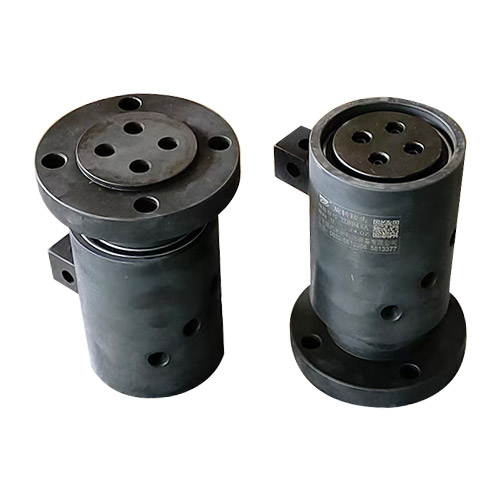
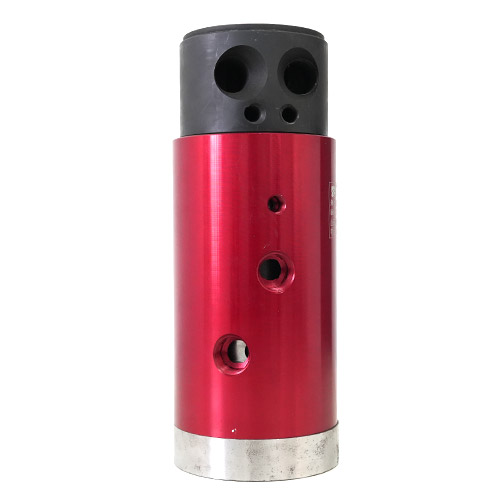
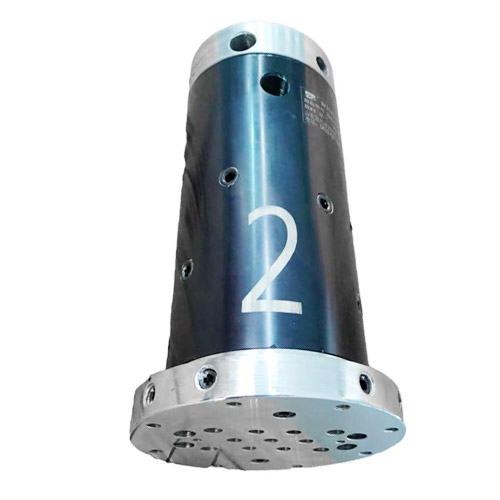
In applications such as robotics or automated tooling, multiple media types—hydraulic oil, air, coolant, or even vacuum—must be transmitted simultaneously. Multi-passage rotary joints are the answer. These highly engineered solutions prevent cross-contamination through isolated channels and optimized internal flow paths. Custom designs from Modern Sealing can handle complex combinations, ensuring precise control and long-term stability across demanding manufacturing environments.
Performance Under Pressure: Designing a High-Pressure Rotary Joint for Hydraulic Systems
High-pressure hydraulic systems are unforgiving. A weak rotary union can fail catastrophically, leading to operational hazards and expensive downtime. Advanced rotary unions designed for hydraulic use must feature hardened shafts, balanced seals, and high-tolerance bearings to withstand the immense internal pressures—sometimes exceeding 400 bar. The result: stable flow, leak-free performance, and reduced maintenance costs over time.
Choosing the Right Rotary Union Manufacturing Partner
Custom Engineering vs. Standard Parts: Why a Customized Rotary Joint is Superior
While standard rotary unions may suffice for simple operations, most high-performance industries benefit from custom-engineered solutions. Every system—whether it’s a CNC spindle, a heat exchanger, or a tire curing press—has unique requirements. Custom rotary joints from Modern Sealing are built to match specific pressures, temperatures, and rotation speeds. This approach reduces wear, improves safety, and optimizes ROI by extending equipment life and minimizing unplanned stoppages.
E-A-T and Support for Your Rotary Joint Investment
Beyond the hardware, expertise matters. Working with an experienced rotary joint manufacturer means gaining access to engineering support, technical training, and fast replacement parts. Modern Sealing provides full lifecycle support—from design consultation to field troubleshooting—ensuring every rotary union installation performs to its fullest potential. This knowledge-based partnership builds reliability and lowers long-term operating costs.
Sample Operating Parameters Table for Rotary Union Selection
| Application Type | Media | Operating Temperature | Pressure Range | Rotation Speed | Recommended Material |
|---|---|---|---|---|---|
| Paper Dryer Cylinder | Steam | Up to 350°C | Up to 15 bar | 500 RPM | Carbon Steel + Graphite Seal |
| Hydraulic System | Hydraulic Oil | 80°C | Up to 400 bar | 2000 RPM | Stainless Steel + PTFE |
| Rubber Curing Press | Thermal Oil | 300°C | Up to 25 bar | 100 RPM | Brass and Carbon Seal |
| Continuous Casting | Cooling Water | 40°C | Up to 50 bar | 1500 RPM | Stainless Steel + NBR |
This table illustrates typical operating parameters, helping engineers and buyers identify the right rotary joint for their application. Selecting based on these factors ensures compatibility, performance, and long service life.
Conclusion
Rotary unions are more than just connections—they are performance enhancers. Choosing the right rotary joint means fewer leaks, longer uptime, and higher energy efficiency. From high-speed CNC machines to high-temperature dryers, a well-designed rotary joint directly improves output quality and profitability.
For industry leaders pursuing reliability, precision, and long-term cost savings, partnering with the right rotary joint manufacturer is the smartest choice. Modern Sealing specializes in designing and manufacturing durable rotary unions tailored to your operating conditions. Contact us today to discuss your system requirements and receive a customized quote to maximize your return on investment.
FAQ
What is the typical life expectancy of a high-speed rotary union in a paper machine application?
Typically, a high-quality rotary joint can last 3–5 years under continuous use, depending on operating speed, pressure, and maintenance frequency.
How does a multi-port rotary union ensure no cross-contamination between different media?
Each passage inside a multi-port rotary joint is isolated with precision seals and bearings, preventing media mixing and ensuring safe, reliable transfer.
What are the telltale signs that my rotary joint requires immediate maintenance or replacement?
Watch for leaks, unusual vibration, temperature spikes, or reduced flow—these signs often indicate worn seals or bearing misalignment.
Can your rotary joint units handle both liquid and pneumatic media simultaneously?
Yes, Modern Sealing designs multi-passage rotary joints capable of transferring liquids, gases, or a combination of both with complete isolation and efficiency.
Latest News
Insights & Innovation
